Legal Document
Brand Usage Guidelines
Last updated: September 2026 · Version 1.0
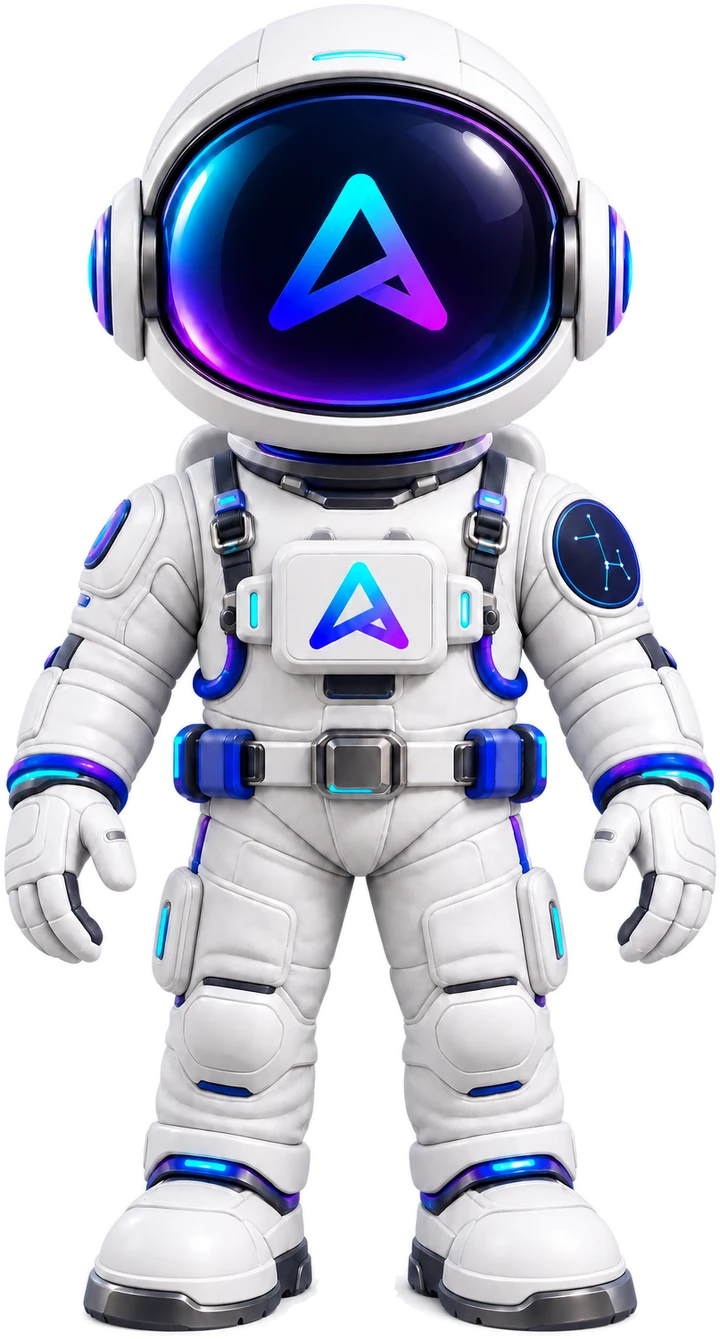
The mascot is Aranis with a body. It is not a separate character, not a user and not an employee. These rules complement the Brand Usage Guidelines — and unlike the logo, every third-party use of the mascot requires prior permission. Requests: brand@aranis.ai
1. What the mascot is
The logo identifies. The mascot acts: it teaches, points, celebrates and warns — where a static signature cannot. It is how Aranis shows up when a surface calls for presence rather than a stamp.
- Ara is the intelligence. The mascot is the body. Neither replaces the other.
- Ara has no gender — it is a suit, not a body. Refer to it by name, never by a gendered pronoun.
- It has no face, eyes or mouth. Expression happens exclusively in the visor.
- The mascot never works as a logo — not in a header, a favicon or a document in place of the signature.
2. The Ara constellation patch
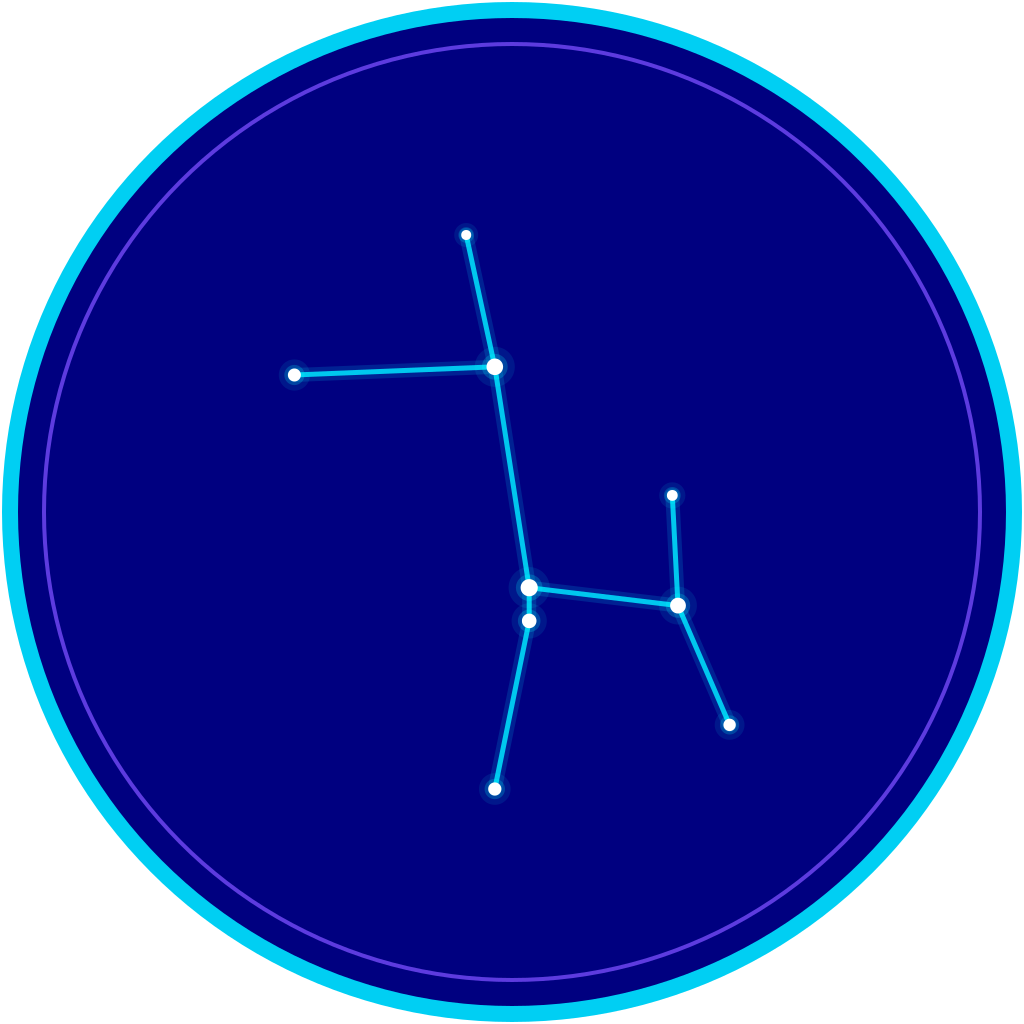
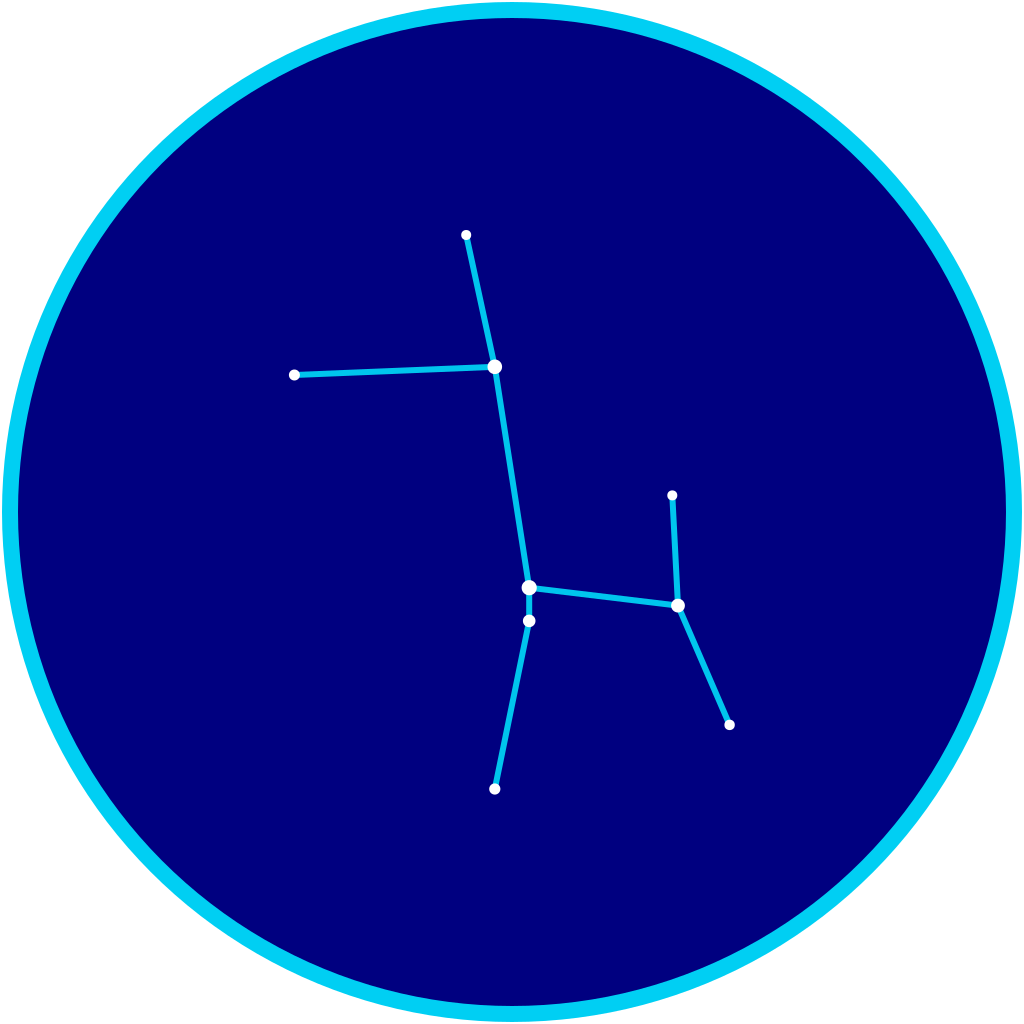
On the shoulder, the mascot wears a textile patch showing the constellation Ara — the Altar, in the southern sky. It is not ornament: it is the lineage of the name. The brand is Aranis, the intelligence is Ara, and the patch is the constellation both come from.
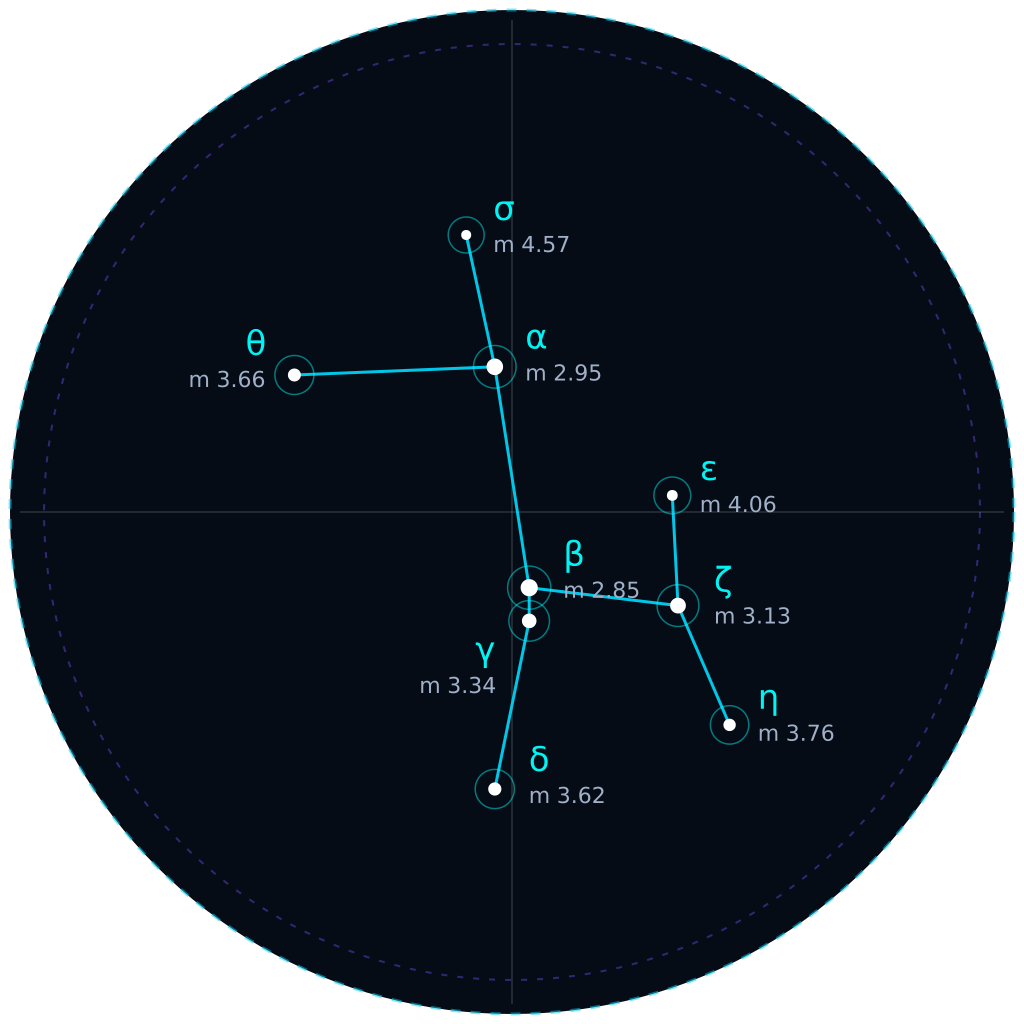
The drawing is a real star chart. Nine stars, each with its Bayer letter and its apparent magnitude — not decorative dots placed by composition, which is why the patch cannot be redrawn by eye.
Stars on the patch · Bayer letter and apparent magnitude
α
m 2,95
β
m 2,85
γ
m 3,34
δ
m 3,62
ε¹
m 4,06
ζ
m 3,13
η
m 3,76
θ
m 3,66
σ
m 4,57
Each star is sized in proportion to its brightness: brighter star, larger dot. Nine stars and eight segments — the count is fixed. Adding, removing or repositioning a star, swapping in another constellation or applying a gradient to the figure turns an insignia into decoration.
The color composition is closed: navy disc, which separates the patch from the off-white suit; outer ring and lines in cyan; inner ring in violet soft; stars in flat white; halo in bright cyan, emissive only. Below 48 px in diameter the patch is dropped — reduced past that it reads as noise, not insignia.

3. Locked anatomy
The model must stay recognizable at 24 px. Proportion changes that break the silhouette are not allowed.
| Element | Rule |
|---|---|
| Helmet | Wide sphere, ~45% of total height. The dominant element of the silhouette. |
| Visor | Curved dome of dark glass. Never a flat screen. |
| Body | Short torso, padded limbs, block hands. Friendly, technical and sturdy. |
| Backpack | Present in every view. No thrusters or excessive sci-fi accessories. |
4. The visor is Ara's surface
Do not draw a face, eyes, mouth or brows. The brand icon is the base of every state, and the visor gradient follows the icon’s chromatic direction.
| State | What it shows | When |
|---|---|---|
| Neutral | Still icon, iridescent gradient | Default for all static art |
| Focused | Targeting frame around the icon | Analysis, processing, search, reasoning |
| Inspired | Discreet particles | Completion, celebration, insight, success |
5. Identity points
There are four, and only the visor is mandatory:
- Visor — official icon + brand gradient. The primary point.
- Chest — central module with the official icon applied as a decal.
- Shoulder — Ara constellation patch. Never replace it with a third-party mark.
- Backpack — icon on the rear structure, visible in back and 3/4 views.
6. Canonical poses
A new pose must keep the silhouette and the visor oriented toward the viewer or the object of attention.
| Pose | Reading | Where |
|---|---|---|
| Trusts | Safety and welcome | Onboarding, empty states, first success |
| Analyzes | Data becoming insight | Academy, reports, analytical screens |
| Protects | Defense of what matters | Trust Center, security, compliance |
| Explores | Anticipating risk | Roadmap, releases, content |
7. Color and reduction
The shell stays off-white and color enters flat on the details. The gradient belongs to the visor alone — it never moves onto the suit. Accents use Filament tokens: cyan is the primary and only mandatory accent; violet ties the suit to the visor; navy is used sparingly; bright cyan is emissive only.
Color outside those tokens does not enter the mascot. Orange, pastel and any warm palette are off-brand.
The smaller the application, the fewer accents survive:
| Level | Use | What survives |
|---|---|---|
| Full | Hero and video | Whole palette: visor gradient + cyan and violet accents |
| Media | Slides and posts | Visor + cyan + violet soft; avoid excess detail |
| Reduced | Figure and keyring | Visor + cyan; preserve silhouette and icon |
| Mono | Embroidery and engraving | Silhouette + icon; no gradient, no accent |
8. What not to do
- Change proportions, stretch or squash the character.
- Replace the dominant off-white of the suit.
- Draw a face on the visor.
- Use the mascot as a logo.
- Apply the brand gradient to suit surfaces.
- Add weapons, thrusters or excessive accessories.
- Apply a third-party mark to the suit, or swap the shoulder patch.
- Reproduce below 24 px without using the reduced version.
- Redraw the logo, the icon or the patch star chart.
- Use color outside the Filament tokens.
- Change the order or chromatic direction of the visor without brand approval.
9. Third-party use
Unlike naming the brand in text, which is free, any third-party use of the mascot requires prior written permission — including editorial illustration, giveaways, stickers, presentations and channel content. Send requests to brand@aranis.ai with the material and the publication date. Responses within 5 business days.
10. Files and technical delivery
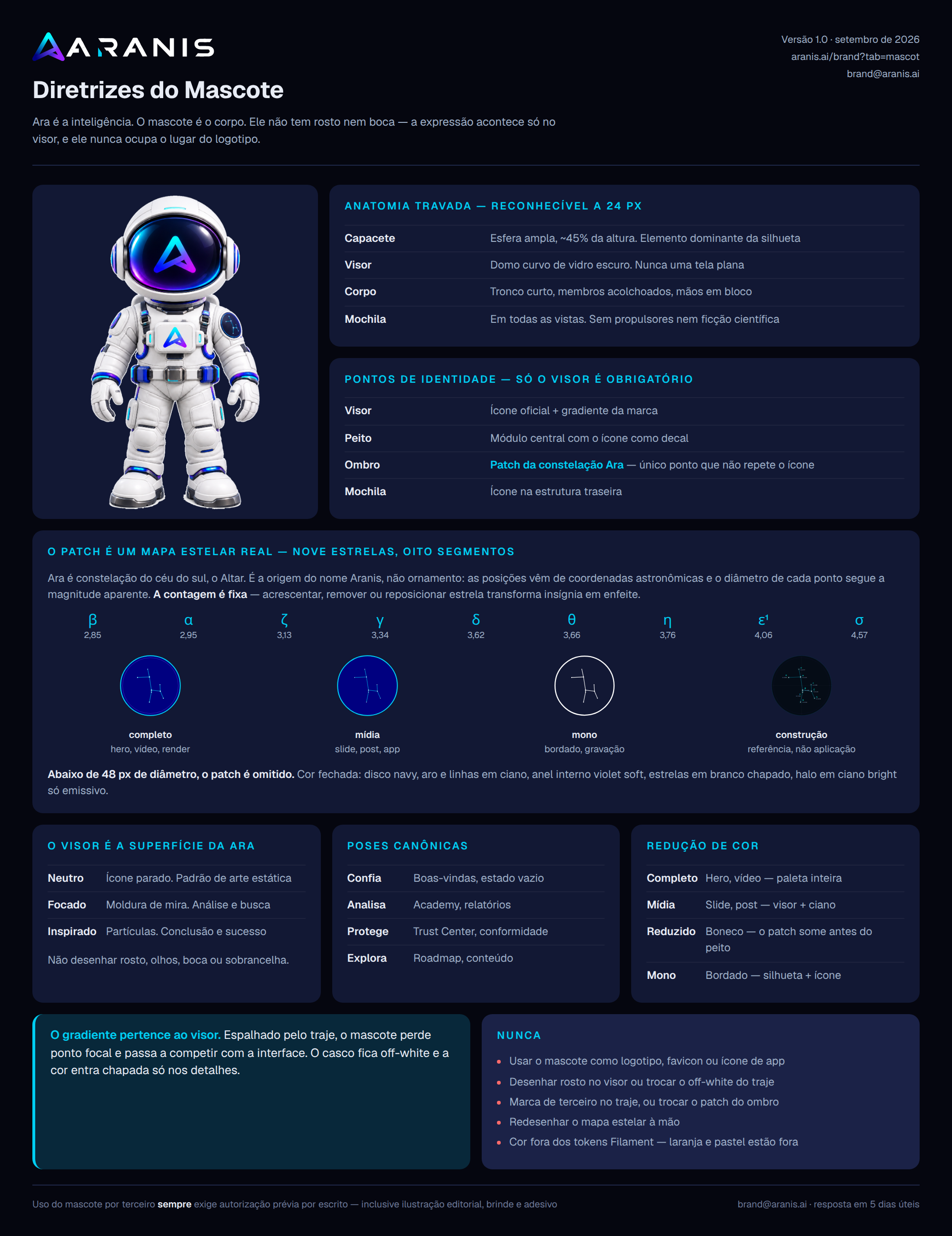
One-sheet summary
Board with anatomy, patch, poses and limits. Shows the current version, constellation on the shoulder.
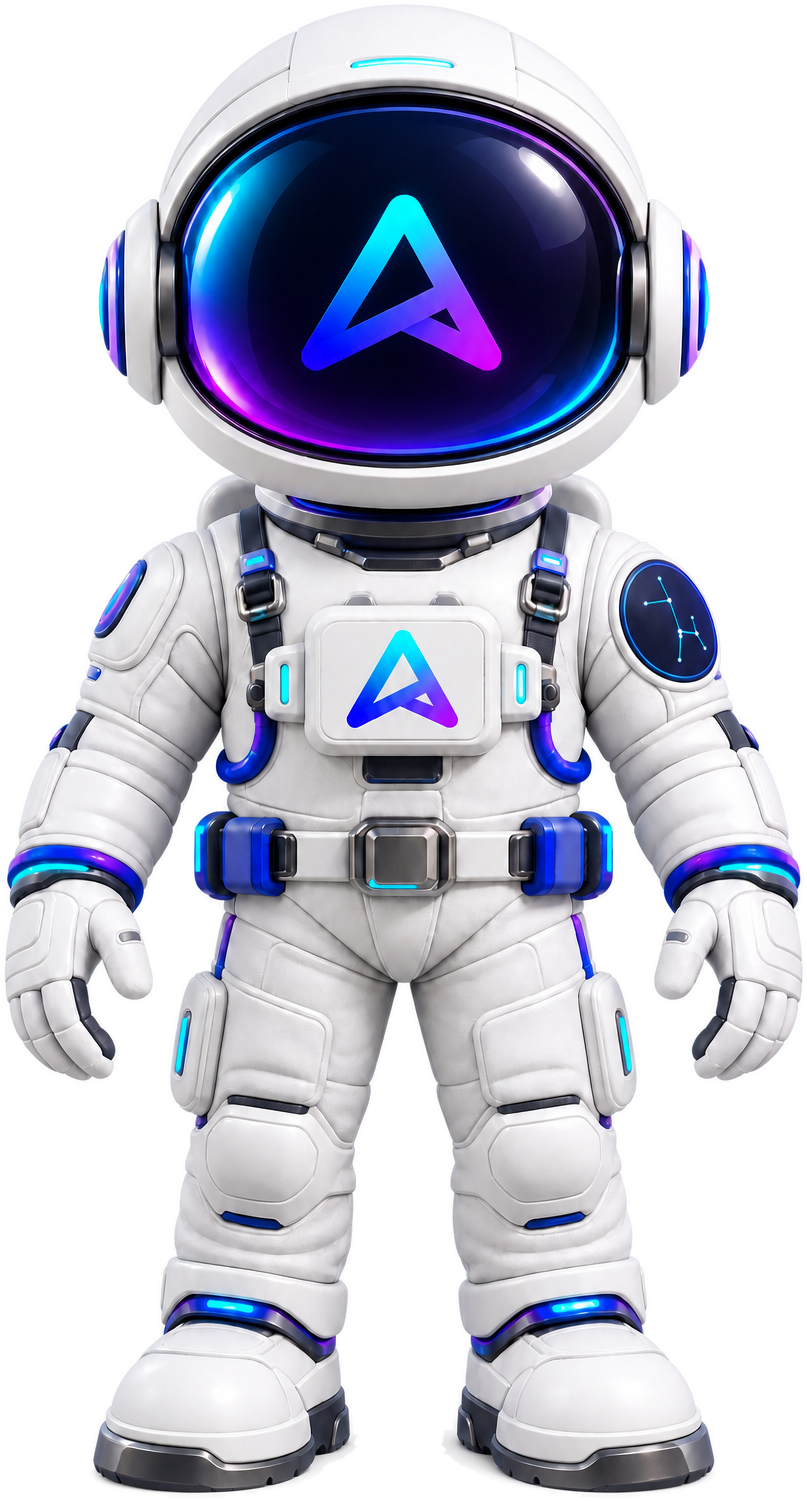
Official mascot · neutral pose
Front render on a light background. WEBP for web, PNG for material.
Ara constellation patch
Four versions above — click any of them to download the SVG.
The 3D model (.blend master, .glb for web, .fbx for interchange) and the print files are sent on request. The render model and the 3D-print model are distinct deliverables — ask for the one your application needs.